
Board Intelligence
National data. Your school's context.
SGAF is the Governance Operating System for UK schools and academy trusts. Before every meeting, someone pulls together records from half a dozen places: GIAS, Ofsted, Companies House, DfE finance and performance data. Board Intelligence gathers all of it, applies it to your school and sits your Quality Standard progress alongside it. Three reports a year, each closing with recommendations for the board's next move.
Included in every SGAF membership, from £229 per school per year.
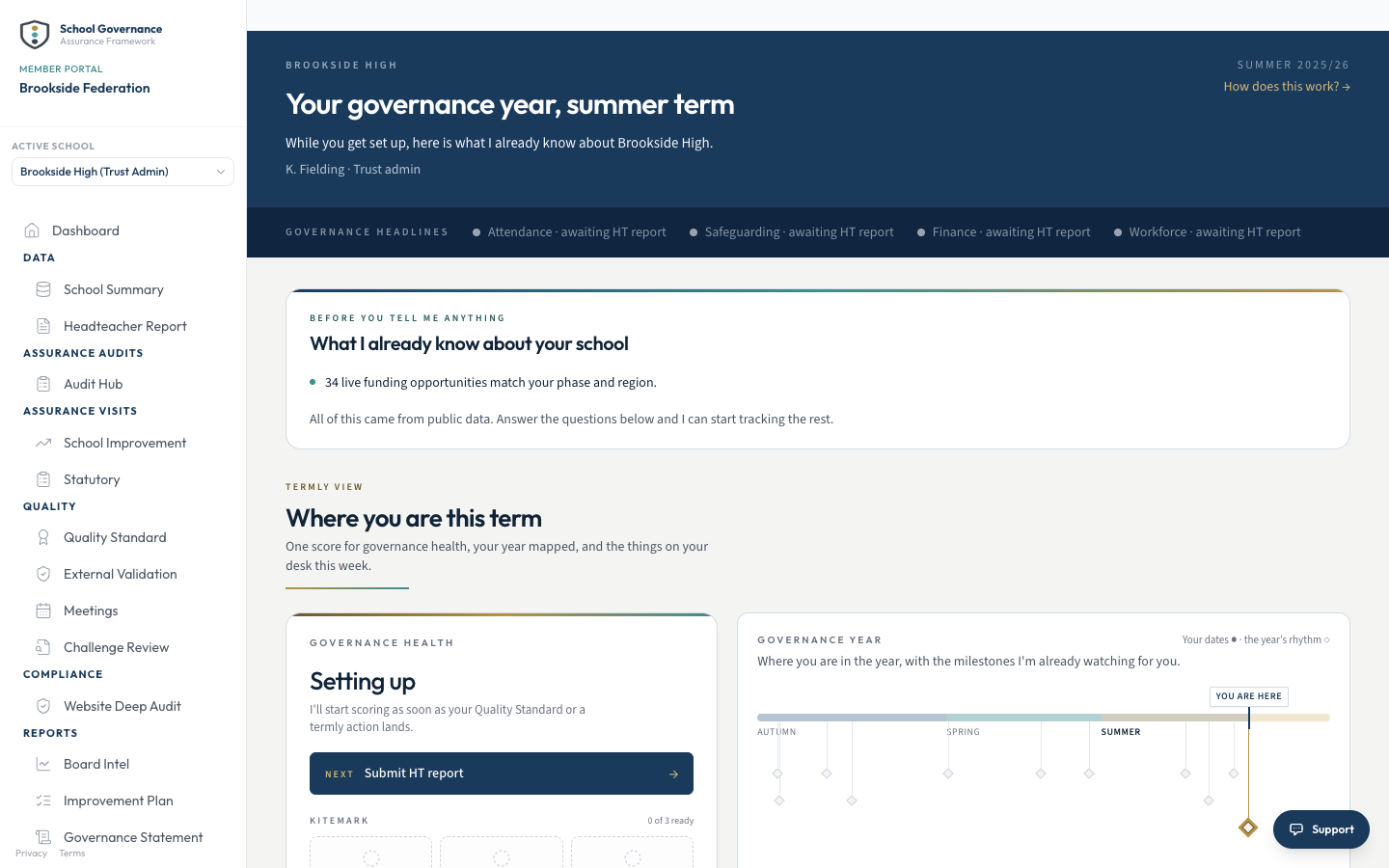
Three reports a year, tracking how your governance position moves
National data from GIAS, Ofsted, Companies House and DfE, applied to your school
Your Quality Standard progress sits alongside it, not a separate exercise
Closes with recommendations for the board's next move
How it works
One briefing, not six tabs
The board stops assembling the picture from scratch before every meeting. Board Intelligence assembles it once, then reads it against your own school.
National data, pulled together
GIAS records, Ofsted history, Companies House filings and DfE performance data, gathered into one place instead of half a dozen.
Applied to your school
Your Quality Standard progress sits alongside the national data, so the briefing reads your school's own context, not just a national one.
Closes with the board's next move
Each report closes with recommendations for what the board should focus on next, then tracks how that position shifts across three reports a year.
No chasing half a dozen sources before a meeting. The board opens one document and starts from the full picture.
Data sources
Six sources. One document.
Published national data, combined with the standard your own board is building.
GIAS
School profile and governor register: URN, phase, headteacher, chair and governor terms.
Ofsted
Full inspection history: grades, sub-judgements, governance commentary and the next-window estimate.
Companies House
For academy trusts: director register, accounts and confirmation-statement status, any overdue filings.
Financial benchmarking
Per-pupil spend set against a phase, size and area-matched comparator group.
DfE performance data
Key stage outcomes against published cohorts for your phase.
Quality Standard progress
Where your own board stands on the framework, sitting alongside the national picture.
National data and your school's own data, combined into one document. The board reads both together instead of reconciling them itself.
Where it sits in the loop
Part of one connected system
Audit findings become risks. Risks become actions. Actions become the annual statement. Trusts see all of it live.
Audit
Guided checks and the termly website review surface what needs attention.
Risk
Findings become risks, each with an owner and a review date.
Action
Risks become visit plans and actions the board can track.
Statement (this tool)
The year's evidence becomes one board-ready briefing, three times a year.
Oversight
Trusts see every school's position, live.
One of the six sources
Your own Quality Standard progress, in the briefing
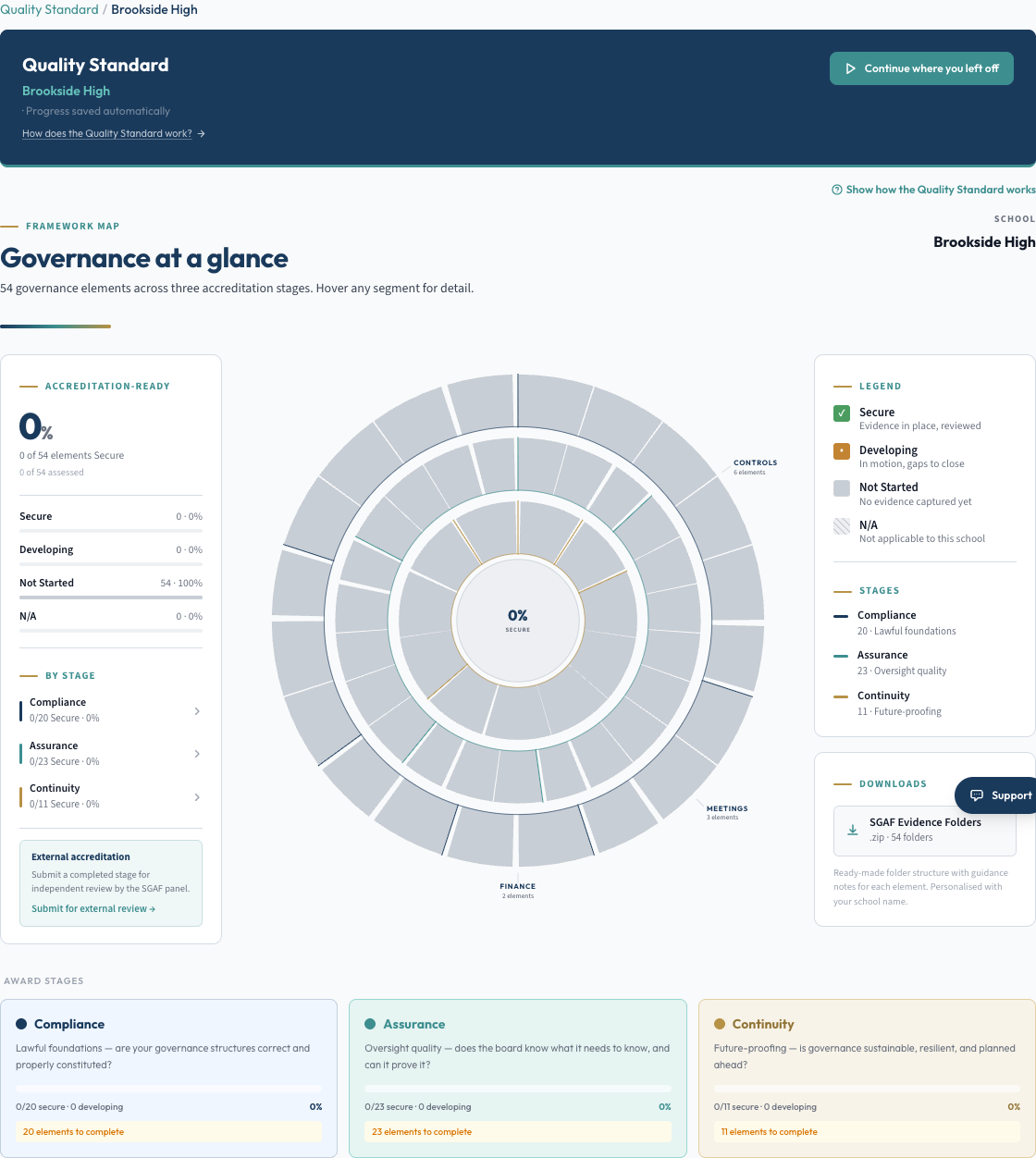
Board Intelligence does not stop at published national data. It sits your own board's progress on the framework alongside it, so the briefing reads as your school's position, not a national average.
Whatever stage your board is working through, secure, developing or not yet started, that position feeds straight into the report the board reads each term, next to the same national records every board sees.
For every seat
Built for the people who prepare for the meeting
The same briefing, whatever your role at the table.
Chair
Walk in with the full picture, not fragments
- National data and your school's own context in one document, before the meeting starts
- Recommendations for the board's next move, not just raw figures
- Three reports a year, so the board can see its position move
Headteacher
Your termly report, working harder
- Your Headteacher Report figures sit inside the same briefing
- The board reads attendance, safeguarding and finance in one place, not six
- Your Quality Standard progress sits alongside it, not a separate exercise
Clerk
One document instead of a dozen tabs
- GIAS, Ofsted, Companies House and DfE gathered without chasing any of them by hand
- The same briefing, refreshed and ready every term
- Board packs finally include the context, not just the agenda
Governor
Turn up already knowing the school's position
- National comparisons already applied to your own school
- The Quality Standard progress you are building shows up alongside the rest
- Recommendations to challenge or support, not just numbers to read
Common questions
What boards ask about the briefing
The practical detail before your first report.
What goes into each report?
Published records from GIAS, Ofsted, Companies House and DfE, combined with your own Quality Standard progress. Each report closes with recommendations for what the board should focus on next.
How often is it refreshed?
Three times a year, once a term, so the board can see how its governance position has moved since the last report rather than starting each meeting from scratch.
Does this replace our Headteacher Report?
No, it reads from it. The Headteacher Report is the head's own termly submission; Board Intelligence draws that alongside the national data so the board sees both in one place.
Is this useful for a multi-academy trust?
Yes. Each school's report feeds the Trust Command Centre, so the central team sees every school's position without asking any of them to report twice.
Not ready to talk? See where your board stands first.
Run a free check →Get started
One twenty-minute call. No commitment.
See your own school's data pulled into one briefing, then decide.