
For trusts
Every school's governance, in one live view
SGAF is the Governance Operating System for UK schools and academy trusts. For the central team of a multi-academy trust, the governance work is happening in every school, yet there is no single place to see it. The Trust Command Centre is that place: an exception grid showing which schools need attention across attendance, safeguarding, finance, governance and workforce, a risk rollup across the whole estate and termly headteacher reports feeding one oversight view. It reads the work each school already does, so there is nothing new to enter.
Per-school pricing across the estate, with central oversight included.
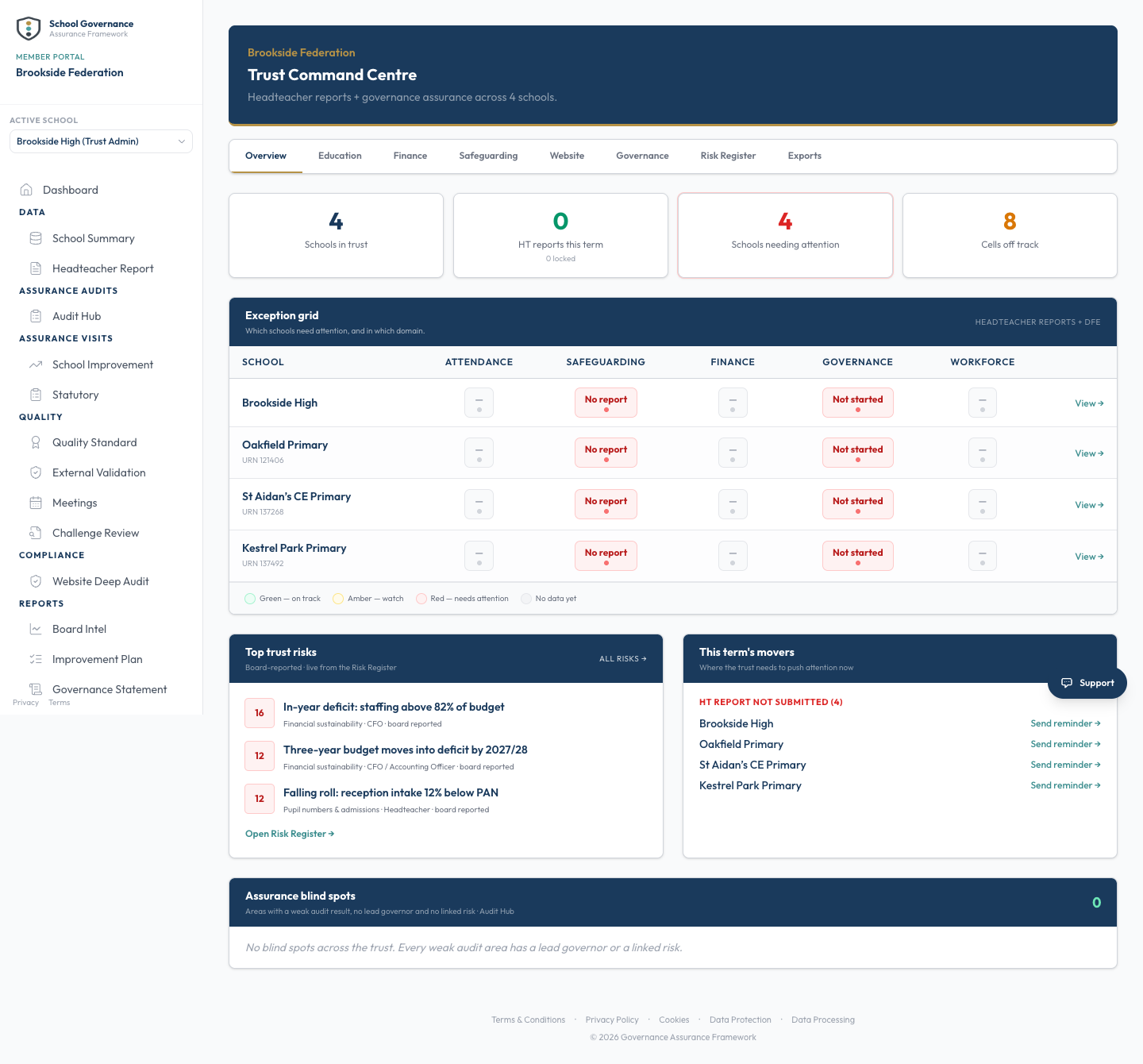
The exception grid
Which schools need attention, without chasing
A status for every school across the five domains a central board cares about. The grid surfaces the exceptions, so the meeting is spent on the two schools that need a conversation, not the ten that are fine.
| School | Attendance | Safeguarding | Finance | Governance | Workforce |
|---|---|---|---|---|---|
| St Aidan's Primary | ✓ | ✓ | ! | ✓ | ✓ |
| Meadowbank Academy | ! | ✓ | ✓ | ✓ | ! |
| Northgate High | ✓ | × | ✓ | ! | ✓ |
| Greenfield Primary | ✓ | ✓ | ✓ | ✓ | ✓ |
| Hill Top C of E | ! | ✓ | × | ✓ | ✓ |
Illustrative view. School names and statuses are examples.
Risk across the estate
Principal risks, lifted straight into the trustee pack
Each school keeps its own risk register. The Command Centre rolls them into one view of the principal risks across the estate, scored by likelihood and impact, ready to drop into the board papers as they stand.
Likelihood →
Illustrative heatmap. Counts are the number of schools sitting in each cell.
-
15
Safeguarding capacity at one school
DSL cover thin across the autumn term at Northgate High. Flagged red on the exception grid, owned by the central safeguarding lead.
-
12
In-year deficit risk
Hill Top C of E projecting an in-year shortfall against budget. Finance committee reviewing the recovery position this term.
-
9
Governor vacancies across the estate
Three boards carrying chair or committee vacancies. Recruitment underway, tracked centrally against term dates.
-
8
Falling rolls at two primaries
Reception intake below the admission number. Funding implications modelled for the next two years.
The risk rollup exports straight into the trustee risk paper, one of six board-ready exports that drop into the pack without rebuilding a table the night before the meeting.
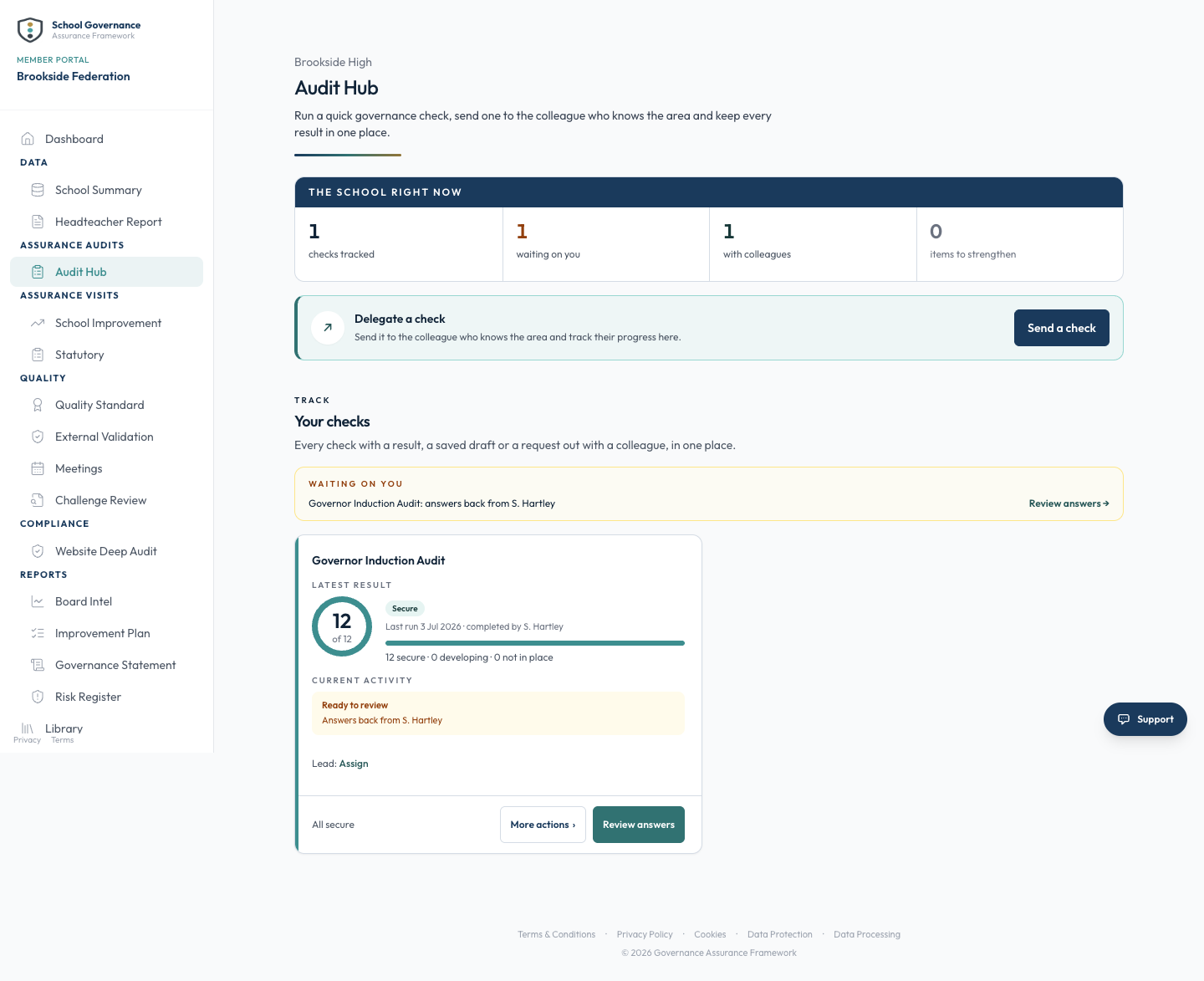
Audit Hub
One audit programme, a completion grid across the estate
The same checks run in every school, delegated by link with a deadline. The completion grid shows who has done what, and reminders chase the outstanding ones so the central team does not have to.
- One audit programme across every school
- Delegation by link, each check with a deadline
- A completion grid showing who has done what
- Reminders that chase the outstanding checks
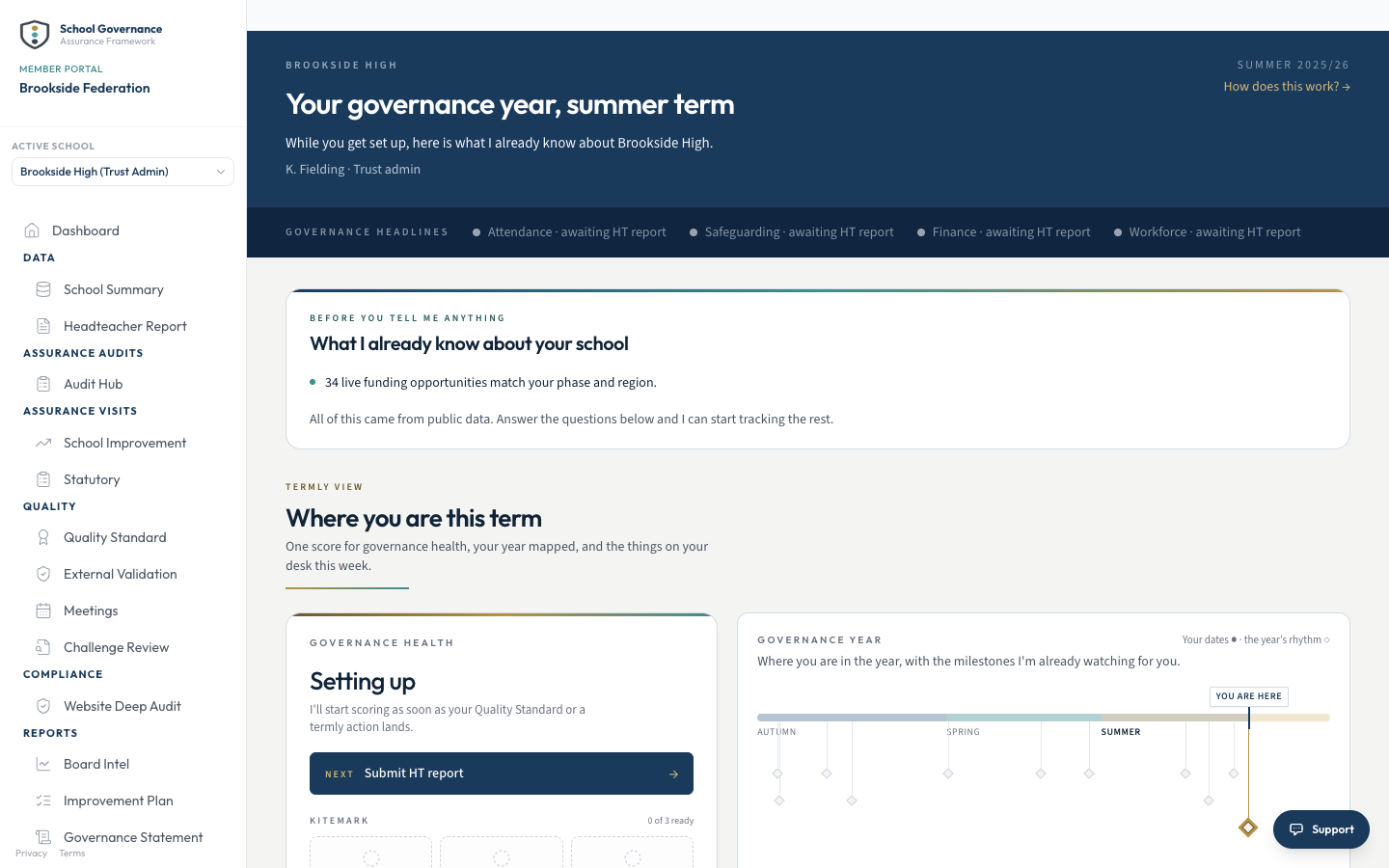
Headteacher reports
Every headteacher report feeds the central view
Each school files one termly headteacher report. Its figures pull through to the estate view as it lands, so the central board reads attendance, safeguarding, finance and workforce across every school from one screen.
- One termly report per school, no new data entry for the trust
- This term's figures gather into a board-ready aggregate
- Outstanding reports are visible at a glance
For the central team
Built for the people who oversee the estate
The same live view, whatever your seat on the trust.
Trust CEO
See every school without chasing for it
- Risks roll up from every school as they change
- Exceptions surface before they escalate
- Termly headteacher reports feed one oversight view
Governance Lead
The same standard in every school you oversee
- One audit programme across the estate
- A completion grid showing who has done what
- Delegation with deadlines and reminders that chase themselves
Trustee
Board papers that arrive already built
- An estate summary and risk rollup straight into the trustee pack
- The position across five domains at a glance
- Nothing a fortnight out of date by the time you read it
An exception grid across five domains: attendance, safeguarding, finance, governance and workforce
A risk rollup across the whole estate
Six board-ready exports, straight into the trustee pack
Per-school pricing with central oversight included
Pricing
Per school across the estate. Central oversight included.
A multi-academy trust pays the standard per-school membership price for each school it brings on. The Command Centre sits on top, included, with nothing extra to buy.
Same per-school price
Every school across the estate pays the standard membership price for its phase. There is no volume discount: each school gets the full tool set, and the central oversight is what the trust gains on top.
One invoice
The whole estate is billed together on a single invoice, paid by bank transfer. No per-school admin, no chasing finance teams across a dozen sites.
Oversight built in
The Trust Command Centre is included on multi-school memberships. The exception grid, risk rollup and board exports come as part of bringing the schools on.
The oversight is the value, not a reason to discount. Each school carries the same membership price wherever it sits, and the estate-wide view is what a central team gets for running its schools on one system.
Get started
One twenty-minute call. No commitment.
See every school's governance in one live view, with your own estate in front of you.
Included on multi-school memberships, billed on one invoice, with no volume discount.